Correlating Weather Variables with Scoring Trends in Outdoor Sports Betting Markets
Written by Hugo Butler · Aug 13, 2026
Correlating Weather Variables with Scoring Trends in Outdoor Sports Betting Markets
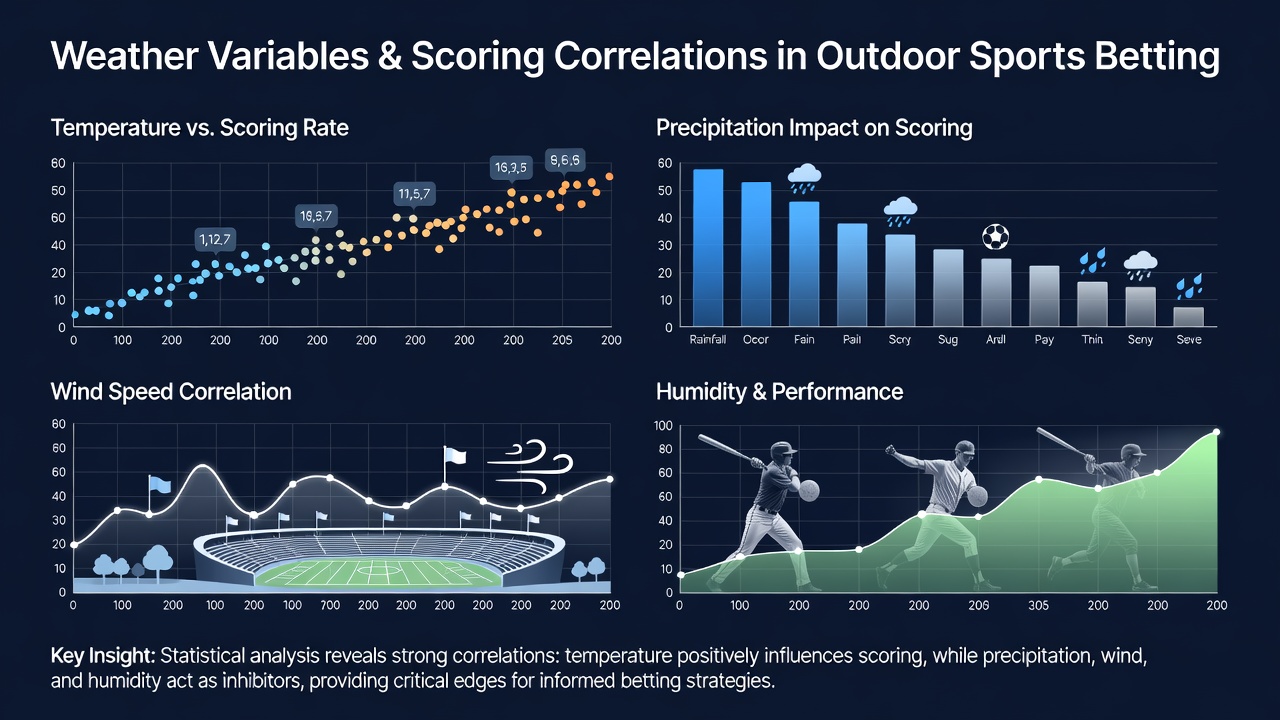
Weather variables such as temperature, wind speed, precipitation, and humidity show measurable statistical correlations with scoring outcomes across several outdoor sports that feature prominently in betting markets, and researchers have documented these patterns through decades of game data combined with meteorological records. In baseball, for instance, higher temperatures correlate with increased home run rates because warmer air reduces air density and allows batted balls to travel farther, while studies from the National Oceanic and Atmospheric Administration confirm that every 10-degree Fahrenheit rise above 70 degrees can add several feet to fly ball distance.
Temperature Effects Across Major Outdoor Leagues
National Football League games played in temperatures above 60 degrees Fahrenheit tend to produce slightly higher total points because passing efficiency improves when players maintain better grip and ball flight remains more predictable, whereas cold weather below 40 degrees often suppresses scoring by increasing fumbles and incomplete passes. Soccer matches in European and South American leagues display similar temperature-driven patterns, with research indicating that teams average 0.3 more goals per game when ambient temperatures stay between 50 and 65 degrees compared with matches below 40 degrees, because player endurance and ball control degrade in extreme conditions.
Wind Speed and Direction Impacts
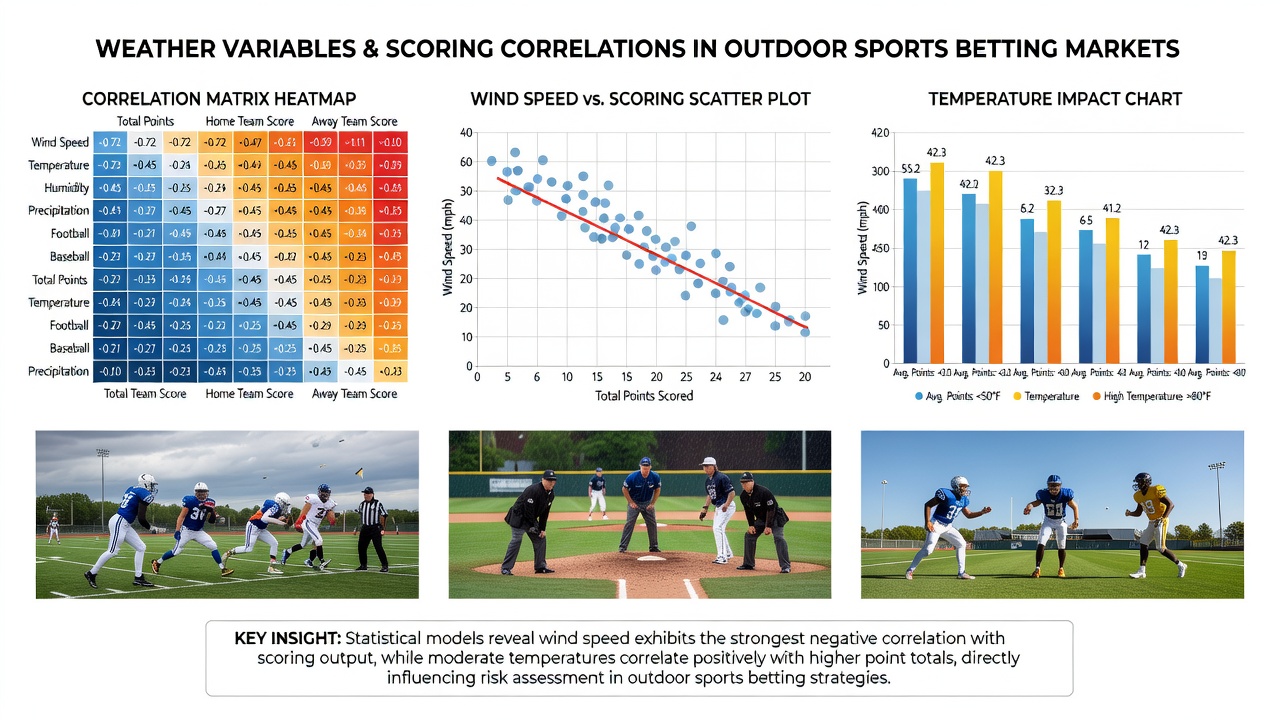
Wind exerts one of the strongest influences on scoring variance, particularly in baseball and American football, where sustained winds above 10 miles per hour at stadiums like Chicago's Wrigley Field or Denver's Empower Field reduce home run totals and alter punt and field goal accuracy. Data collected over multiple MLB seasons reveals that outfield fly balls become outs more frequently when tailwinds exceed 15 mph, directly lowering run totals and affecting over/under betting lines, while crosswinds create unpredictable ball trajectories that increase strikeout rates in certain parks. In outdoor tennis tournaments such as the Australian Open or Wimbledon, gusts above 20 mph correlate with higher unforced error rates and fewer total games per set because servers lose control and rallies shorten.
Precipitation, Humidity, and Atmospheric Pressure
Light rain or drizzle in soccer and cricket often reduces total goals and runs because the ball becomes heavier and players adjust tactics toward possession rather than attacking play, yet heavier precipitation can produce the opposite effect in American football by increasing fumble rates and shortening drives. Humidity levels above 70 percent correlate with reduced home run production in baseball because moist air increases drag on the ball, and similar patterns appear in golf where high humidity combined with heat affects ball carry distances on long shots. Barometric pressure changes, particularly rapid drops ahead of storms, show weaker but still detectable links to scoring because lower pressure slightly reduces air density and can extend ball flight in baseball and golf.
Statistical Methods and Data Integration
Analysts combine historical game logs with weather station readings using regression models that control for team strength, venue, and time of season to isolate weather effects, and these models routinely appear in academic papers published by sports analytics groups. During August 2026, multiple MLB and soccer datasets from North American and European venues will again be cross-referenced with real-time meteorological observations to update correlation coefficients that betting markets already price into totals and player props. Observers note that venues at higher elevations such as Coors Field amplify temperature and humidity effects because baseline air density is lower, producing larger swings in scoring when weather deviates from seasonal norms.
Regional Variations and Long-Term Trends
Climate data from the Australian Bureau of Meteorology indicates that outdoor sports in warmer regions experience more consistent scoring patterns year-round, whereas northern hemisphere leagues face sharper seasonal swings that create identifiable edges in totals betting during spring and fall transitions. These correlations remain stable enough that several professional sportsbooks adjust opening lines based on forecast variables days before games, yet the adjustments reflect aggregate historical probabilities rather than deterministic predictions.
Conclusion
Weather variables produce statistically reliable correlations with scoring across outdoor sports betting markets when researchers apply proper controls and large sample sizes, and ongoing data collection through 2026 continues to refine the precision of these relationships for baseball, football, soccer, tennis, and golf. Bettors and analysts who incorporate temperature, wind, precipitation, and humidity data into models gain access to measurable edges that appear consistently across multiple leagues and venues.