Calendar Crunch: Rest Windows and Their Influence on Results in Professional Leagues
Written by Jonas Ludwig · May 19, 2026
Calendar Crunch: Rest Windows and Their Influence on Results in Professional Leagues
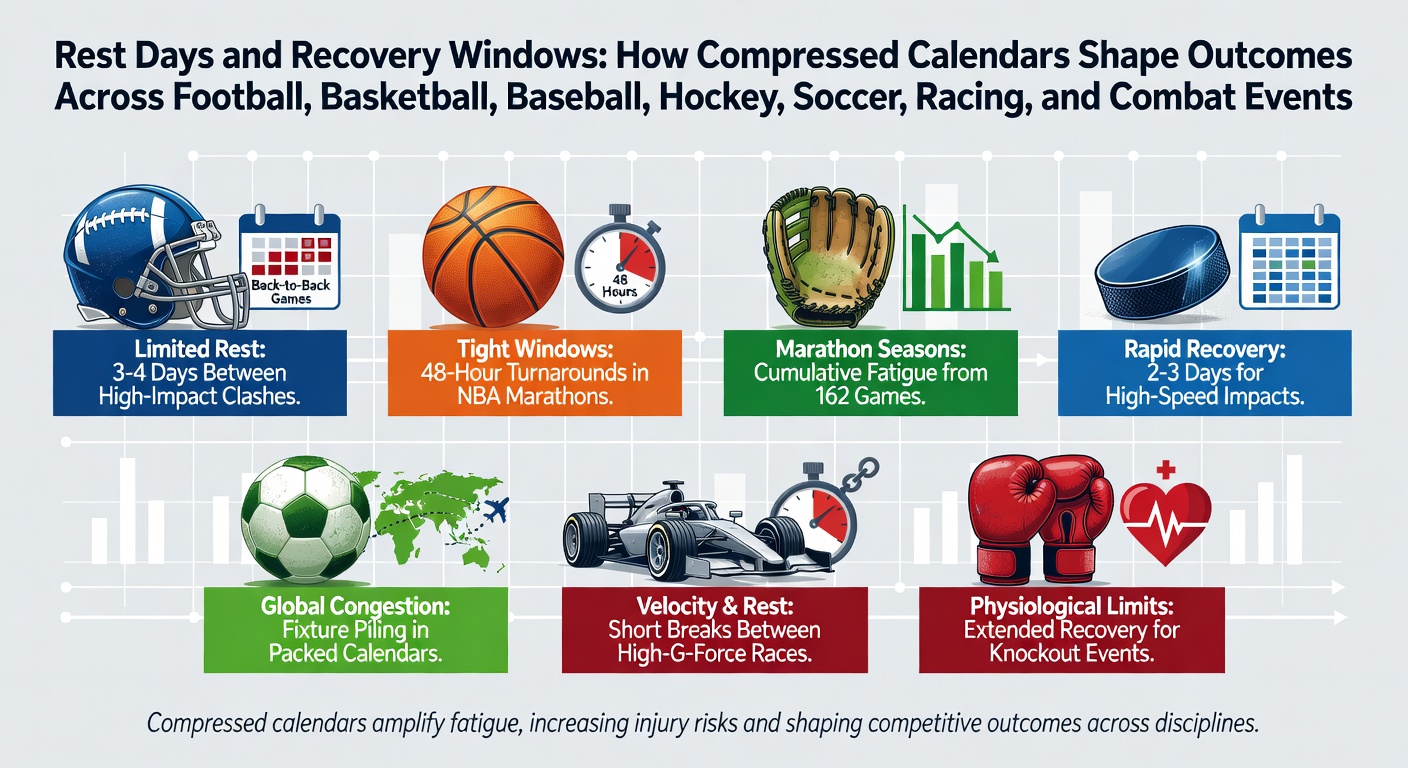
Compressed schedules have become a defining feature across major sports, where teams and athletes navigate tight turnarounds between games while recovery windows shrink under the demands of travel, back-to-backs, and extended seasons. Data from league operations shows that these patterns produce measurable shifts in performance metrics, particularly in areas such as shooting accuracy, defensive efficiency, and injury incidence rates. Observers note that leagues like the NBA and NHL schedule up to 82 games over six months, creating clusters of contests with minimal rest that correlate with altered statistical outputs.
Football and Basketball Patterns
Football schedules feature weekly games with occasional Thursday night slots that reduce preparation time, and researchers tracking player loads report higher rates of soft-tissue strains when rest falls below four full days. In basketball the situation intensifies because back-to-back games occur multiple times each month; league tracking data indicates teams playing on zero or one day of rest win roughly 5 to 7 percent fewer games on average than squads with two or more recovery days. Analysts examining box-score aggregates find drops in three-point percentages and rebounding numbers during these compressed stretches, especially in the second half of back-to-backs.
Baseball and Hockey Considerations
Baseball’s 162-game slate spreads contests across six months yet still produces short recovery windows during doubleheaders and travel days; pitching staffs show elevated earned-run averages when starters receive fewer than five days between outings, according to historical performance databases. Hockey mirrors this density with 82 games and frequent cross-country flights, and studies of ice-time distribution reveal that players logging heavy minutes on consecutive nights record lower plus-minus figures in subsequent matches. Both sports demonstrate how even brief reductions in rest accumulate across a long campaign and affect late-season results.
Soccer Fixtures and International Windows
Soccer calendars interleave domestic leagues, cup competitions, and international breaks, resulting in some clubs facing three matches within eight days during peak periods. Performance tracking platforms document declines in high-intensity running distance and pass-completion rates when squads operate on limited recovery, particularly among midfielders who cover the greatest ground. In May 2026 several European leagues will conclude their seasons amid overlapping fixture congestion caused by earlier postponements, creating additional test cases for how recovery timing influences title races and relegation battles.
Racing and Combat Event Demands
Motor racing series compress events into weekends that include practice, qualifying, and race days with minimal intervals between sessions, leading teams to monitor driver fatigue indicators closely through telemetry. Data from series medical reports links shorter turnaround periods to increased error rates in high-speed corners and braking zones. Combat events such as mixed-martial-arts cards often schedule fighters with two to three weeks between bouts, yet title challengers sometimes accept shorter notice periods; physiological monitoring studies show elevated markers of muscle damage and slower reaction times when the interval drops below ten days.
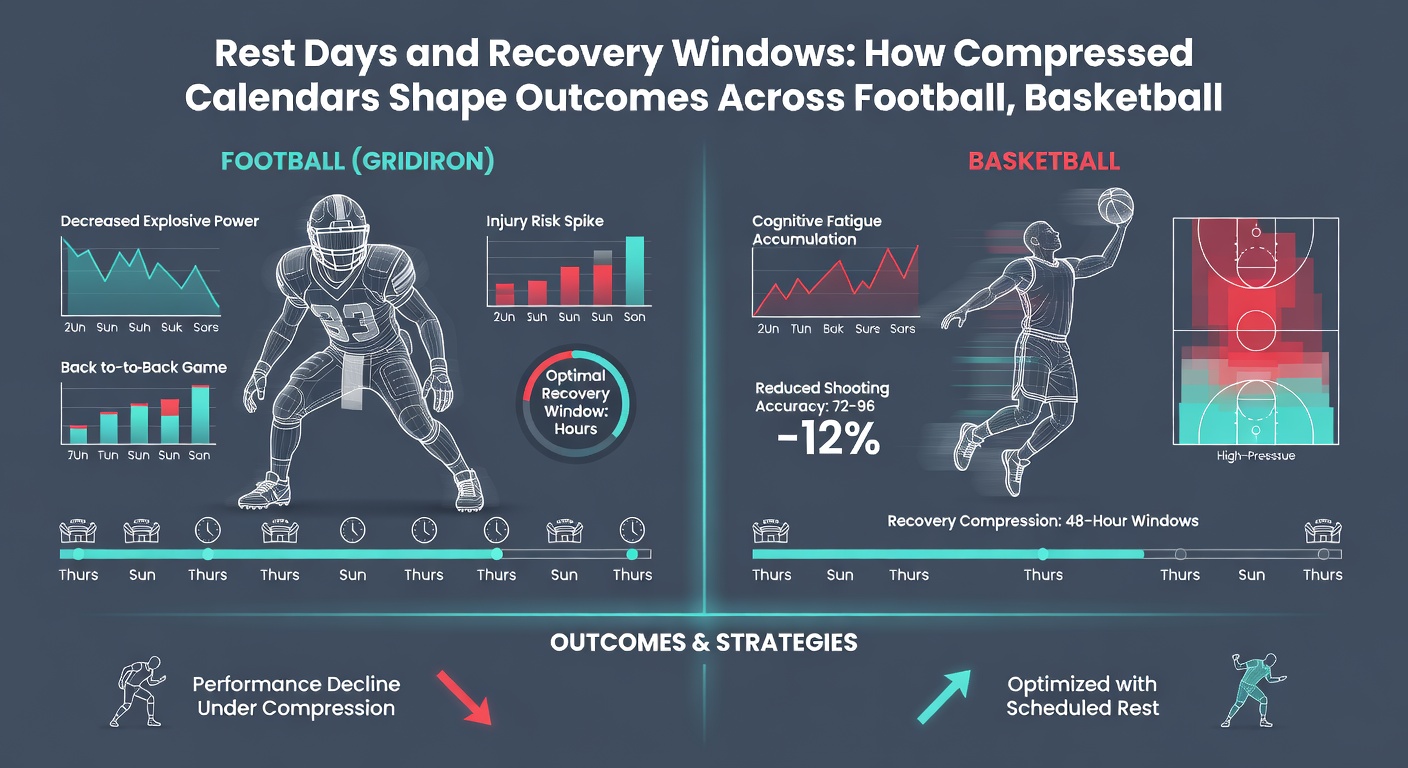
What's interesting is how organizations now integrate wearable technology and load-management protocols to offset these calendar pressures. Teams across basketball and hockey have adopted structured rest protocols that rotate key contributors during less critical regular-season windows, producing measurable preservation of late-game output. Similar approaches appear in soccer academies that track GPS-derived workload metrics to adjust training volume when fixture lists tighten.
League Responses and Scheduling Adjustments
League offices have introduced targeted changes such as expanded bye weeks in football and fewer back-to-backs in basketball during holiday periods, yet the overall volume of games remains high. Research published through the American College of Sports Medicine indicates that structured recovery strategies reduce certain soft-tissue injury rates by 15 to 20 percent when implemented consistently. Racing organizations have lengthened intervals between select events to allow for more thorough mechanical and driver preparation, while combat promotions increasingly publicize minimum rest guidelines for ranked athletes.
Conclusion
Across these varied disciplines the relationship between rest availability and competitive outcomes continues to shape roster construction, travel logistics, and in-game decision making. Evidence from performance databases and medical tracking programs demonstrates consistent patterns: shorter recovery intervals correspond with shifts in key statistics and elevated physical demands. As calendars evolve through 2026 and beyond, leagues and teams refine their approaches to balance entertainment value against athlete sustainability, producing an ongoing experiment in how compressed schedules influence results on the field, court, ice, track, and octagon.