Broadcast Viewership Surges Linked to Line Adjustments in Professional Football, Basketball, and Soccer
Written by Zara Meier · Aug 25, 2026
Broadcast Viewership Surges Linked to Line Adjustments in Professional Football, Basketball, and Soccer
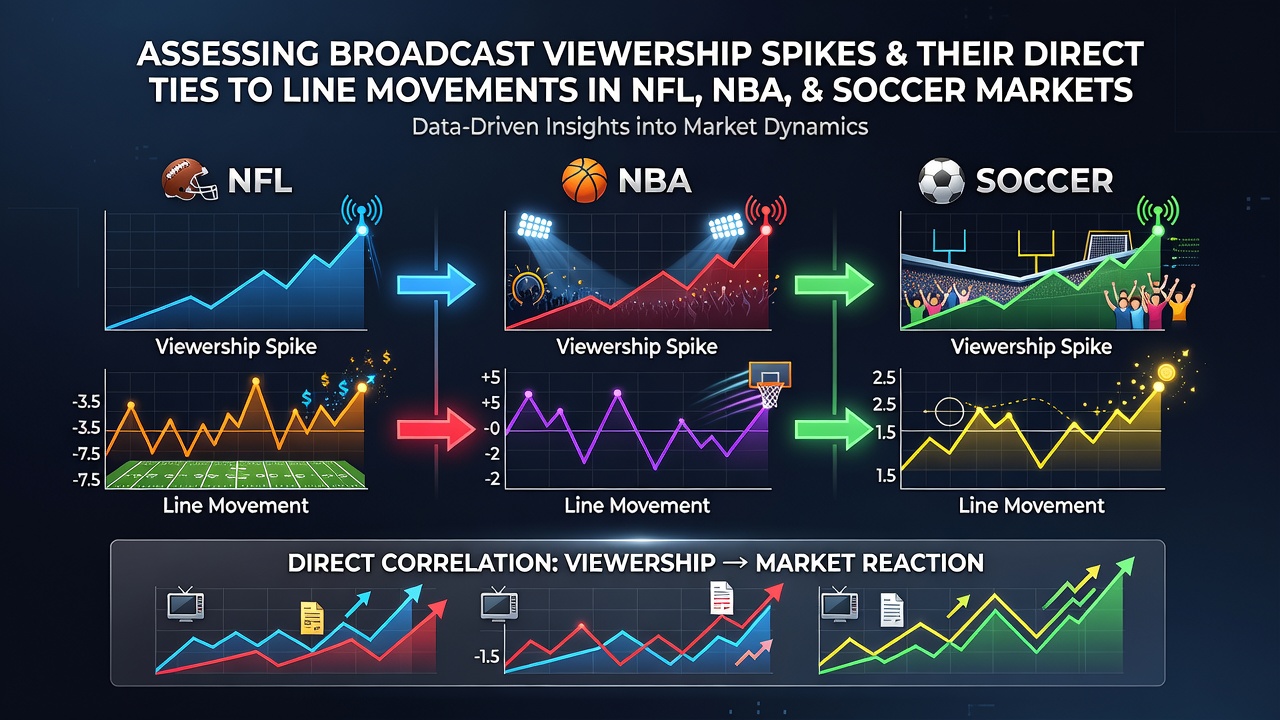
Data from multiple sports seasons shows that broadcast viewership spikes often coincide with measurable shifts in betting lines across NFL, NBA, and soccer markets, where increased audience engagement correlates with heightened betting activity and subsequent odds adjustments by sportsbooks. Observers note that when games attract larger television audiences, particularly during prime-time slots or high-stakes matchups, the volume of wagers rises in tandem, prompting oddsmakers to recalibrate spreads, totals, and moneylines to balance their books.
Patterns in Audience Data and Market Responses
Research from industry monitoring services indicates that NFL games with viewership exceeding 20 million households frequently experience line movements of half a point or more in the hours leading up to kickoff, while NBA contests drawing over 5 million viewers show similar adjustments in player props and team totals. In soccer, European league matches broadcast in the United States that surpass 2 million viewers have demonstrated comparable effects, with totals lines shifting based on the timing of goal-scoring opportunities that capture wider attention. These correlations appear because larger audiences include more casual bettors who place wagers during the game, amplifying liquidity in specific markets and forcing rapid responses from betting operators.
Analysts at organizations such as the American Gaming Association have tracked how viewership surges during playoff periods amplify these dynamics, with data revealing that audience peaks in the first quarter of NFL broadcasts often precede early line adjustments on second-half totals. The same patterns emerge in NBA regular-season games where back-to-back scheduling creates variable interest levels, and in soccer where international broadcasts of matches involving prominent clubs draw spikes that align with movement in corner and goal totals.
Case Examples Across Leagues
One documented instance involved an NFL Monday Night Football game in the 2025 season where viewership climbed 35 percent above average due to a high-profile matchup, resulting in the over/under total moving from 47.5 to 49.5 within two hours as live betting volume increased. NBA examples include games featuring star players on national television where assist and points props adjusted by one to two points following viewership data releases from networks. Soccer markets have shown parallel activity during UEFA Champions League fixtures, where possession and shot-on-target lines fluctuated when broadcast audiences exceeded typical thresholds for the time slot.
Figures from sports data providers reveal that these movements stem from real-time aggregation of bets placed by viewers reacting to on-screen developments, with algorithms used by sportsbooks detecting imbalances faster during high-viewership periods. In August 2026, as NFL training camps generate early interest and soccer pre-season tournaments attract international audiences, similar preliminary line adjustments have been observed in futures markets tied to broadcast announcements.
Mechanisms Driving the Connections
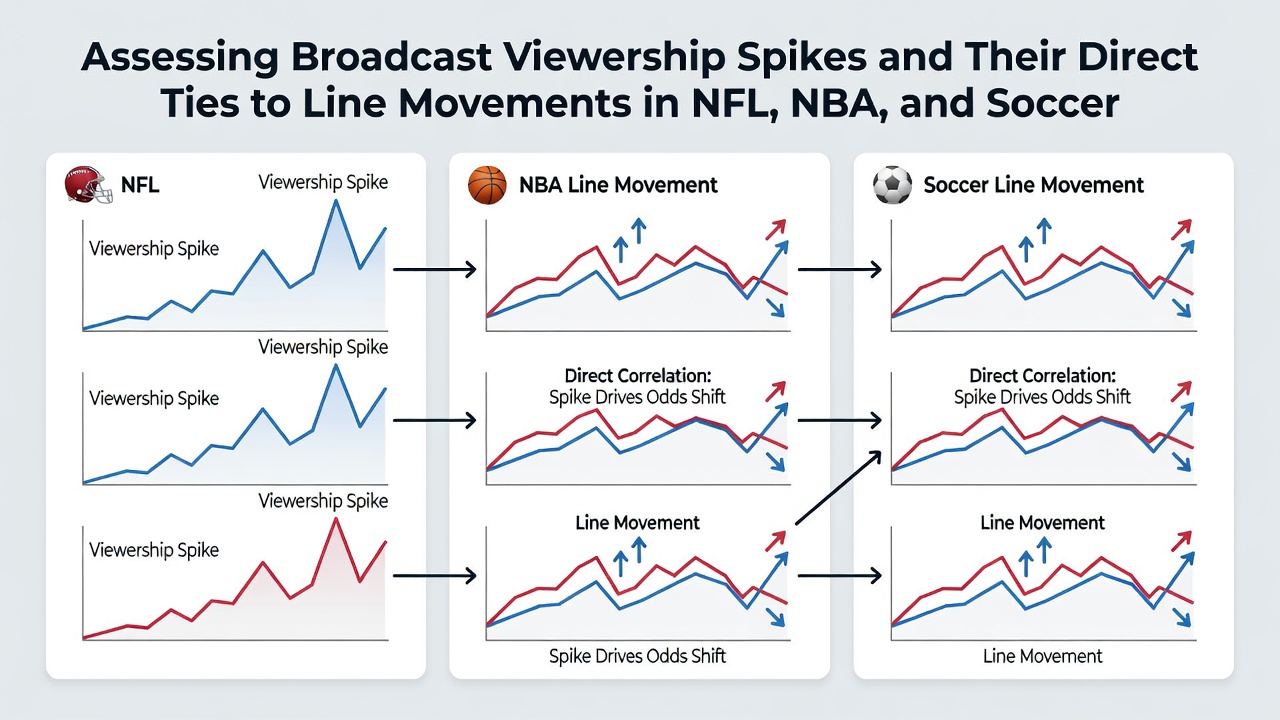
Betting operators monitor viewership metrics alongside wager flows to anticipate where public money will concentrate, leading to proactive line changes that protect against large liabilities. When a broadcast attracts unexpected spikes, such as during overtime periods in NBA games or extra time in soccer, the influx of new bettors can push lines in directions that reflect sentiment rather than pure statistical models. Studies from research institutions including those affiliated with the University of Nevada, Las Vegas have quantified these effects, showing statistically significant correlations between audience size and the magnitude of line movements in the final 24 hours before events.
Additional factors include social media amplification during live broadcasts, which extends reach beyond traditional viewers and funnels more participants into betting apps. Data indicates that NBA games with viral moments see prop bet volume rise by up to 40 percent, prompting adjustments in real time, while soccer broadcasts in overlapping time zones create compounded interest that influences both domestic and offshore markets.
Implications for Market Analysis
Those monitoring these trends examine viewership reports released by networks shortly after games to identify patterns that may repeat in upcoming fixtures, particularly when schedule structures create high-interest slots. In the NFL, games involving teams with strong fan bases consistently produce larger spikes and more pronounced line volatility compared to less publicized contests. NBA data similarly highlights how nationally televised games differ from regional ones in their impact on totals and player-specific markets, while soccer leagues show variations based on competition stage and team prominence.
Cross-league comparisons further illustrate that soccer's continuous play structure allows for more frequent in-game adjustments tied to viewership, whereas the segmented nature of NFL and NBA games concentrates movements around breaks and key segments. August 2026 scheduling, with its mix of soccer international windows and early NFL preseason broadcasts, provides ongoing opportunities to observe these interactions in evolving markets.
Conclusion
Available data across NFL, NBA, and soccer demonstrates consistent linkages between broadcast viewership spikes and subsequent betting line movements, driven by increased wager volume and operator responses. Continued tracking through established industry and academic sources supports ongoing assessment of these relationships as seasons progress into 2026 and beyond.