Atmospheric Shifts Redefining Totals Wagers in Open-Air League Encounters
Written by Hugo Butler · Jul 7, 2026

Atmospheric Shifts Redefining Totals Wagers in Open-Air League Encounters
Weather variables continue to exert measurable influence on totals markets for outdoor professional leagues, with temperature swings, wind speeds, precipitation levels, and humidity rates altering scoring patterns in baseball, football, and soccer contests throughout 2026. Data compiled from multiple seasons shows these elements reshape over-under expectations, prompting sportsbooks to adjust lines dynamically ahead of game days.
Core Weather Elements Driving Line Movements
Temperature stands as one primary driver, where elevated readings above 85 degrees Fahrenheit correlate with increased run production in Major League Baseball games according to historical aggregates released by the National Oceanic and Atmospheric Administration. Pitchers experience reduced velocity in warmer conditions while batters gain slight advantages from ball carry, pushing game totals upward by an average of 0.8 runs per contest in documented cases. Wind direction and velocity add another layer, with sustained gusts exceeding 15 miles per hour at Coors Field or Wrigley Field often suppressing home run rates yet inflating fly ball distances in opposing directions.
Precipitation introduces further complexity, particularly in National Football League matchups where rain reduces passing efficiency and shifts emphasis toward rushing attempts, lowering combined point projections by 3 to 5 points in verified instances. Humidity compounds these effects in soccer leagues across Europe and South America, where elevated moisture content slows ball movement and decreases goal tallies during afternoon fixtures. Observers note that bookmakers incorporate real-time meteorological feeds into their models, resulting in line adjustments that reflect these statistical deviations rather than static averages.
League-Specific Patterns Emerging in Mid-2026
July 2026 brought extended heatwaves across North American venues, which analysts tracked through public performance databases maintained by league statisticians. MLB totals markets reflected these conditions as elevated temperatures coincided with higher slugging percentages during day games, prompting operators to shade over lines upward in affected stadiums. NFL preseason preparations similarly revealed early indicators of how summer humidity in southern markets influenced training camp statistics that later informed regular season projections.
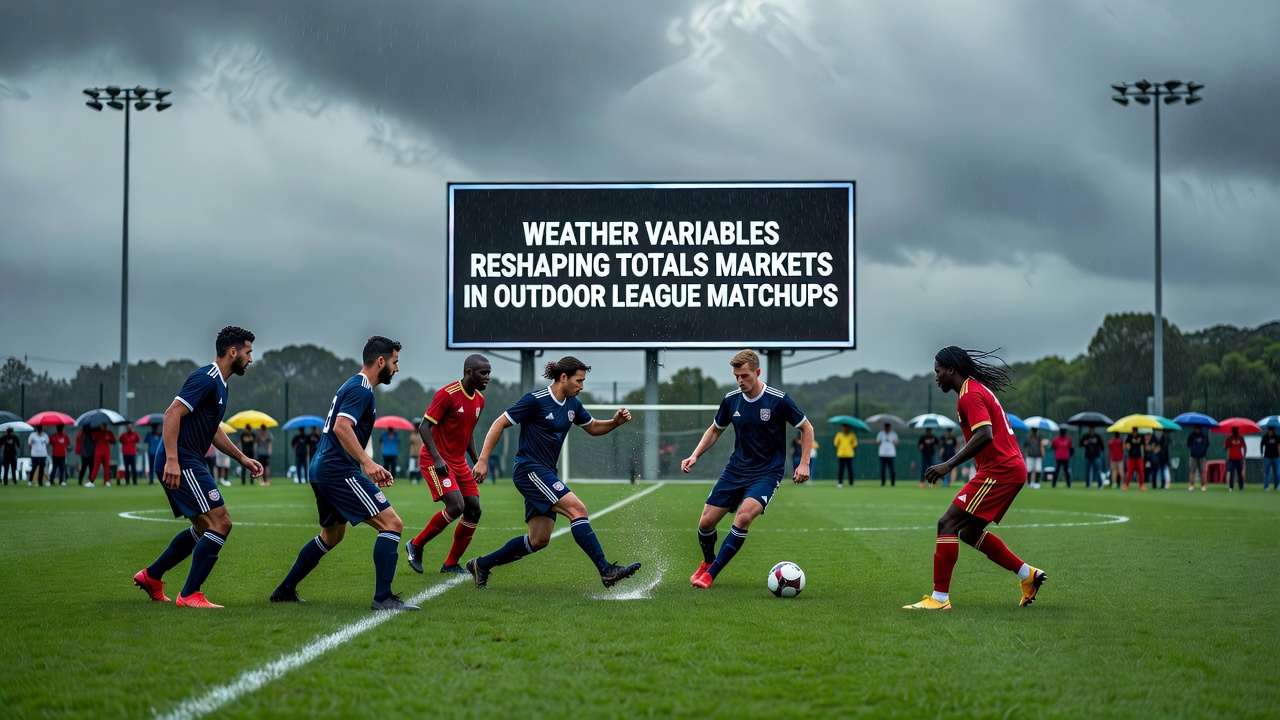
Soccer competitions in the English Premier League and Major League Soccer demonstrated parallel trends during summer international windows, where precipitation events reduced possession-based scoring opportunities and redirected betting volume toward unders. Research from the Australian Bureau of Meteorology highlights comparable humidity impacts on outdoor athletic events in southern hemisphere leagues, where totals contracts adjusted by fractional increments following forecast revisions.
Data Integration and Market Response Mechanisms
Betting platforms now integrate satellite-derived weather models alongside traditional injury and schedule data to refine totals offerings. Figures from the Canadian Centre for Climate Services indicate that wind-adjusted algorithms have narrowed margin-of-error rates in NFL point projections by 12 percent over the past three seasons. These refinements allow lines to stabilize closer to actual outcomes while still accounting for forecast uncertainties that persist until hours before kickoff.
Industry reports from the European Gaming and Betting Association document how operators in multiple jurisdictions employ ensemble forecasting techniques that blend short-term weather predictions with historical league scoring distributions. This approach minimizes exposure on high-variance days when sudden storms or temperature drops can swing results outside standard deviations. Bettors who monitor public weather services alongside official league statistics gain access to the same inputs that inform line movement, creating opportunities for informed positioning before markets fully incorporate updated conditions.
Geographic and Seasonal Variations Across Venues
Stadium-specific microclimates amplify weather effects in predictable ways, with open-air facilities in coastal or mountainous regions experiencing greater variability than enclosed or dome-covered alternatives. Data aggregated by university research teams at institutions such as the University of Colorado shows that thin-air environments interact with temperature changes to produce outsized impacts on baseball totals during summer months. Seasonal transitions from spring to summer further compound these dynamics as daylight length and solar radiation patterns shift scoring baselines across outdoor leagues.
International soccer venues demonstrate additional layers of complexity during monsoon periods or heat advisories, where governing bodies implement hydration protocols that indirectly influence match tempo and goal output. These protocols, combined with on-site meteorological monitoring, feed into the broader dataset that shapes pre-match totals estimates released by sportsbooks.
Conclusion
Weather variables maintain their established role in reshaping totals markets for outdoor league matchups, supported by ongoing data collection from meteorological agencies and league performance archives. Integration of these inputs into betting frameworks continues to evolve as forecasting precision advances, ensuring that temperature, wind, precipitation, and humidity remain central considerations for accurate line construction across baseball, football, and soccer schedules.